How to Teach Recall Dog Owners Can Trust

Reliable recall training starts with a simple rule: make coming back to you the best option every time. If you want to know how to teach recall dog skills that hold up in real life, begin in a quiet space, say your cue once, reward generously, and increase distractions slowly rather than rushing to true off-leash work.
Start with foundations before you ask for a full recall
Your dog is more likely to succeed if they already respond to their name and can offer eye contact in calm settings. UC Davis Veterinary Medicine recommends proofing those skills first, then gradually adding distractions before you expect a strong come command off leash.
What your dog should know first
- Their name predicts attention to you.
- They can make eye contact when you say their name.
- They can do this indoors or in another low-distraction setting before you move outside.
If your dog does not reliably look at you when you say their name, pause recall training and practice that first. UC Davis notes that these attention skills are the base for later recall work, including on-leash practice in more distracting places like parks.
Pick rewards that truly matter
Recall is not the place for boring rewards. AKC recommends immediate, high-value reinforcement such as chicken, cheese, or liver, and UC Davis also supports using food, toys, praise, and positive physical attention.
For many dogs, a mix works best. A food-motivated dog may sprint back for chicken, while a toy-loving dog may come faster for a quick tug or tossed toy after arriving.
| Situation | Good reward choice | Why it helps |
|---|---|---|
| First lessons indoors | Small soft treats | Easy to deliver quickly and often |
| Mild distractions outdoors | Very high-value food like chicken or cheese | Helps you compete with smells and movement |
| Dog loves play | Toy, tug, or chase-you game after arrival | Makes coming back feel active and fun |
Teach the recall cue in a way that sets your dog up to win
The biggest early mistake is saying “come” when your dog is not going to do it. AKC specifically advises adding your verbal cue only when your dog is already moving toward you, which helps your dog connect the word with the action you want.
The first sessions, step by step
- Choose a quiet room or fenced yard with very little going on.
- Wait for your dog to begin moving toward you.
- As they commit to coming, say your cue once in a cheerful voice: “Come!”
- Reward right away when they reach you.
- Repeat in short, upbeat sessions.
This sequence matters. Instead of testing your dog, you are teaching a clear association: hearing the cue and moving to you leads to something great.
How to deliver the cue
UC Davis recommends saying the cue once, in a clear, upbeat voice, while keeping treats out of sight at first so you are not bribing. They also suggest lowering your body in an inviting posture, rewarding as soon as the dog commits to coming, and then heavily reinforcing when they arrive.
That can look like this: your dog glances your way, you crouch a little, smile, say “Come,” and then pay well when they get to you. If they hesitate, avoid repeating the cue over and over.
What if your dog does not come?
If your dog blows off the cue, the setup is too hard, not proof that your dog is stubborn. Move back to an easier environment, increase reward value, shorten the distance, or reduce distractions.
This is where tracking total daily activity can help. A dog who has not had enough movement or mental work may be too wired to focus, while an overtired dog may check out. Pawmi’s breed-tuned approach can be useful here because a dog’s training focus often improves when their overall activity level fits their breed, age, weight, and health.
Build reliable recall training by increasing difficulty slowly
Reliable recall is built in layers, not leaps. AKC advises practicing first in fenced areas, then using a 15–20 foot long line in bigger, more distracting spaces rather than jumping straight to true off-leash work.
A practical progression
- Indoors: one room, then different rooms.
- Fenced area: yard or secure dog-safe enclosure.
- Long line practice: 15–20 foot line in open spaces with more smells and movement.
- Harder environments: only after many successful repetitions.
A long line gives your dog freedom without giving up safety. It also lets you practice the come command off leash skills before your dog is actually off leash.
Raise only one challenge at a time
Keep the training fair by changing just one variable per session. For example, increase distance but keep distractions low, or add mild distractions while staying close.
- Longer distance, same quiet place
- Same distance, slightly busier environment
- Same setup, but after a sniff break or mild play
If your success rate drops, make the next repetition easier right away. That keeps the cue strong instead of muddy.
Off-leash does not mean everywhere
Even a dog with excellent recall may struggle around wildlife, fast-moving dogs, or intense scents. Secure spaces are still the best choice for most off-leash practice. If your dog has health limitations, anxiety, pain, or sudden behavior changes, talk to your veterinarian before pushing training difficulty.
Use recall games for dogs to make practice fast and fun
Games are one of the best ways to get more quality repetitions without making training feel like a drill. AKC recommends several recall games for dogs that build speed, enthusiasm, and habit strength.
1. Go & Come
This game teaches your dog that turning away does not end the exercise; it sets up the return. AKC recommends tossing a low-value treat away, then calling your dog back for a high-value reward.
- Toss a plain, low-value treat a short distance away.
- Let your dog move to get it.
- As your dog turns back or starts toward you, give your recall cue.
- Reward with something better when they arrive.
This helps your dog practice reorienting to you after moving away, which is exactly what recall requires in the real world.
2. Hide & Seek
Hide & Seek builds the habit of searching for you when they hear the cue. Start indoors, hide behind a doorway or furniture, call once, and celebrate when your dog finds you.
As your dog gets better, make the hiding spots harder. This game is especially useful for dogs who like movement and hunting for things with their nose.
3. Catch Me If You Can
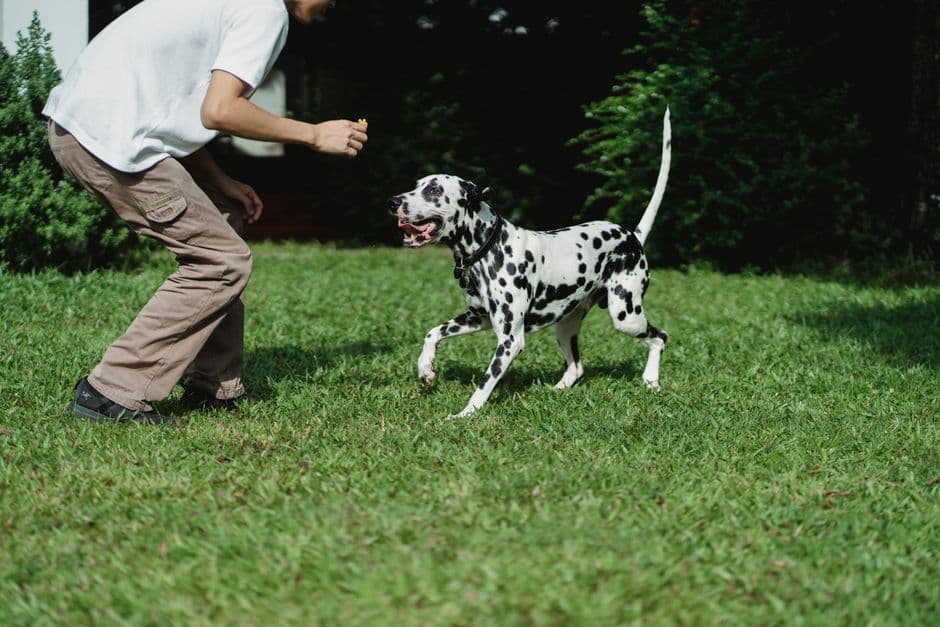
AKC suggests this game to make you more exciting than the environment. After your dog is engaged with you, call them and then run away a few steps so they chase you.
The key rule is clear: never chase your dog. If you chase them, you may accidentally teach keep-away instead of recall.
4. Ping-pong recall
If you have another person to help, stand several feet apart and take turns calling the dog. Reward every arrival. This adds repetition, movement, and excitement without much pressure.
For energetic breeds, these short games can complement physical exercise and sniffing walks. Mental enrichment and movement together often produce better focus than either one alone.
Avoid the mistakes that quietly weaken your cue
Many recall problems come from human habits, not dog defiance. The fastest way to protect your cue is to stop using it in ways that predict disappointment, punishment, or the end of fun.
Never punish a dog for coming
Both UC Davis and AKC warn against punishing a dog after they return, even if they were slow or made a detour first. If your dog finally gets to you and then gets scolded, grabbed harshly, or loses access to everything enjoyable, the cue starts to feel risky.
Instead, reward the return, then think about how to make the next repetition easier and clearer.
Do not make recall always mean “fun is over”
AKC and UC Davis both caution that immediately clipping on the leash or ending play every single time can poison the cue. Sometimes call your dog, reward, attach the leash briefly, then release them to play again if it is safe.
This teaches your dog that coming to you does not always predict the end of freedom.
Skip force-based tools and trainer advice that relies on fear
AAHA’s behavior guidelines recommend trainers who use positive methods and advise avoiding prong collars, shock collars, leash jerks or yanks, and dominance-based explanations. Recall should build trust and speed, not hesitation.
If you need extra help, look for a qualified trainer who uses humane, reward-based methods. If your dog panics outdoors, shuts down, or shows sudden aggression or fear, consult your vet as well.
Common recall errors to fix now
- Repeating “come, come, come” instead of giving one cue.
- Showing the treat before the dog commits, which becomes bribing.
- Practicing only when you need to stop something fun.
- Jumping from the living room to a busy park too quickly.
- Expecting true off-leash reliability before long-line success.
Make recall part of your everyday routine
The most reliable recalls come from many easy wins woven into daily life. Short, frequent practice works better than occasional marathon sessions.
A simple weekly plan
- Daily indoors: 3 to 5 quick recalls in different rooms.
- Several times a week: one or two recall games.
- Outdoor practice: fenced area or long line sessions with manageable distractions.
- Real-life rewards: sometimes release your dog back to sniffing, play, or exploring after they come.
Sniff walks, food puzzles, and scent games can support this work by taking the edge off excess energy and giving your dog healthy outlets. Enrichment does not replace training, but it often makes training easier.
If you use a daily activity app, look at recall as one piece of the whole picture. A dog’s response can shift with age, breed tendencies, health, and how much physical and mental activity they have had that day. Pawmi’s breed-tuned approach is useful for keeping daily activity realistic, because not every dog needs the same amount of movement before they can focus well.