How Many Steps Should a Dog Walk Per Day?

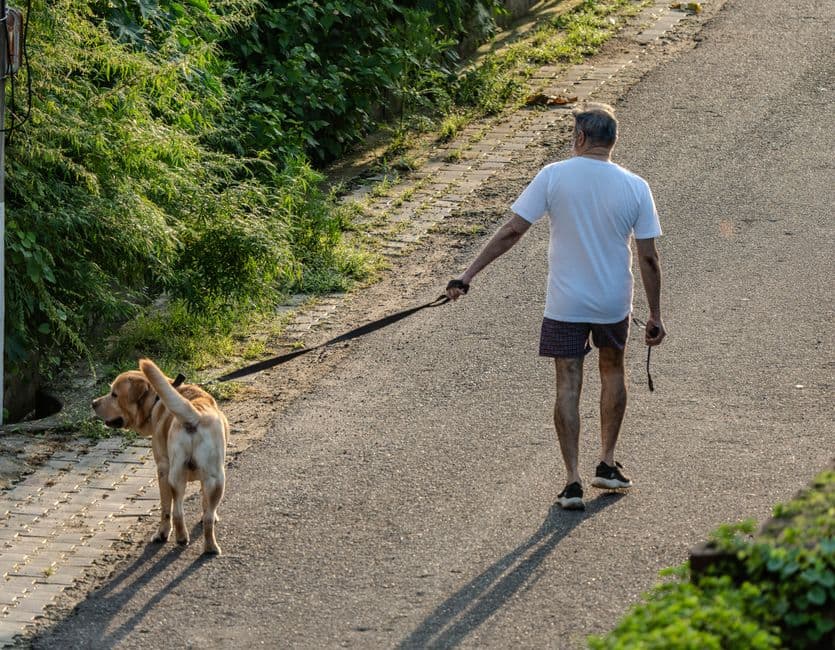
Short answer: there is no single step count that fits every dog. A realistic daily target ranges from about 2,000 to 4,000 steps for a small, flat-faced or senior dog, up to 12,000+ steps for a young, high-energy working breed. Most healthy adult dogs do well on roughly 30 to 120 minutes of walking a day. The right number depends on your dog's breed, age, size, weight and health, not on a one-size-fits-all rule.
The short answer, by energy level
As a rough guide for healthy adult dogs:
- Low-energy and flat-faced breeds (Bulldogs, Pugs, many seniors): about 20 to 40 minutes at a gentle pace.
- Average companion breeds (many spaniels, smaller terriers, calmer retrievers): about 45 to 60 minutes.
- High-energy working and sporting breeds (Border Collies, Huskies, Vizslas): 1 to 2 hours, plus mental work.
Translated into steps, that is roughly 8,000 to 12,000 or more for an active dog, and far fewer for a small, brachycephalic or older dog. A sensible floor for almost any dog is around 1,000 steps of gentle daily movement.
Why "steps" beat a flat time goal
A 20-minute walk means something very different to a Chihuahua and a Great Dane: the small dog takes far more steps to cover the same ground. Counting steps, and scaling them to your dog's stride, captures real effort better than minutes alone. That is why Pawmi converts your phone's step count into your dog's steps using breed stride science, then sets a personalized daily goal you can actually track.
What changes your dog's number
Five factors move the target up or down:
- Breed energy: a herding or sporting breed needs far more activity than a lap dog of the same size.
- Flat-faced (brachycephalic) breeds: shortened airways limit safe exertion, so goals are lower and the pace gentler, especially in warm weather.
- Size and joints: giant breeds carry more load, so very long single sessions are eased to protect growing or aging joints.
- Age: puppies follow the well-known "5-minute rule", about 5 minutes of structured exercise per month of age, up to twice a day, so a 4-month-old puppy gets roughly 20 minutes per session. Senior dogs gradually taper down.
- Weight and health: overweight dogs should start lower and build up slowly, and conditions such as arthritis or heart disease lower the goal. Always check with your veterinarian before increasing exercise for a dog with a health condition.
How to find your dog's exact daily step goal
Instead of guessing, you can get a number tailored to your dog. Pawmi's breed exercise guide lists a science-based daily step goal for 370+ breeds, and the free daily goal calculator personalizes it further by your dog's age, weight and energy level. The formula starts from a 10,000-step baseline and adjusts for breed energy, flat-faced airway limits, giant-breed joints, age, body condition and health conditions, with a 1,000-step minimum so even the gentlest dog has a clear target.
Make every walk count
Distance is only part of the picture. Letting your dog sniff, explore and make choices on a walk (sometimes called a "sniffari") provides mental stimulation that tires many dogs more than speed does. For high-energy breeds, adding short training games or fetch can deliver the equivalent of extra steps in enrichment. Consistency beats intensity: two shorter daily outings usually serve a dog better than one long weekend hike.
Signs the number is wrong
Too little exercise often shows up as restlessness, weight gain, destructive chewing or excess barking. Too much can mean limping, lagging behind, heavy panting, or reluctance to get up the next day. Adjust gradually and let your dog set the pace.
Frequently asked questions
How many steps should a dog walk per day? For most healthy adult dogs, roughly 8,000 to 12,000 steps if they are active, and 2,000 to 5,000 for small, flat-faced or senior dogs. Personalize it to your dog rather than using a flat figure.
Is a 30-minute walk enough for a dog? For many average and lower-energy dogs, yes, ideally split into two outings. High-energy breeds usually need more, plus sniffing and play for mental stimulation.
Can a dog walk too much? Yes. Puppies, seniors, overweight dogs and flat-faced breeds are most at risk of overexertion. Build up slowly and watch for limping or heavy panting.
Daily walking is one of the simplest things you can do for your dog's weight, joints and behavior, and a growing body of research links regular activity to healthier, longer lives. Use a personalized goal, track it, and adjust together with your dog and your veterinarian.
This article is general guidance for healthy dogs and is not a substitute for veterinary advice. Check with your veterinarian before changing your dog's exercise, especially for puppies, senior dogs, or dogs with health conditions.
Sources: American Kennel Club, How Much Exercise Does a Dog Need?; Dog Aging Project.