Pesquisa sobre envelhecimento canino e atividade para a vida toda

A pesquisa sobre envelhecimento canino aponta em uma direção clara: o movimento continua importante à medida que os cães envelhecem, mas a melhor rotina não é “mais exercício a qualquer custo”. Para cães sêniores, o objetivo é uma atividade regular e ajustada que combine com a idade, a mobilidade, a condição corporal e o estado de saúde do seu cão — e isso começa percebendo as mudanças cedo e conversando com o veterinário.
O que a pesquisa diz sobre envelhecimento, atividade e saúde
A principal conclusão dos estudos sobre longevidade canina é que o envelhecimento saudável é moldado pela vida cotidiana, não pela idade sozinha. A pesquisa moderna analisa movimento, ambiente doméstico, comportamento e rotina em conjunto, em vez de tratar a velhice como uma categoria fixa.
O Dog Aging Project, um grande estudo longitudinal apoiado pelo NIH, foi criado para entender como genes, estilo de vida e ambiente influenciam o envelhecimento em cães de companhia e como ampliar o healthspan — o período de vida vivido sem doença. Isso é importante para os tutores porque muda a conversa de “Quantos anos meu cão tem?” para “Como meu cão está funcionando no dia a dia?”
Os recursos da pesquisa Health and Life Experience Survey mostram que o estudo do envelhecimento canino hoje acompanha centenas de perguntas sobre saúde, comportamento, estilo de vida e ambiente. Em outras palavras, movimento e envelhecimento saudável em cães estão sendo estudados como parte do quadro completo da vida diária.
Essa visão de quadro completo também aparece em trabalhos publicados pelo Dog Aging Project. Um estudo de coorte que examinou fatores ambientais e sociais incluiu a mobilidade como um desfecho de saúde medido, reforçando que a forma como um cão envelhece está ligada à rotina vivida e ao ambiente, não apenas à data de nascimento.
Quando um cão é realmente “sênior”?
A principal conclusão aqui é que “sênior” não significa a mesma idade para todas as raças ou tamanhos corporais. Um Dogue Alemão e um Poodle Toy não envelhecem no mesmo ritmo do calendário, e essa é uma das razões pelas quais regras genéricas de exercício muitas vezes falham.
As Diretrizes de Cuidados para Sêniores da AAHA de 2023 definem cães sêniores como aqueles no último 25% da expectativa de vida estimada. Isso significa que seu cão pode entrar na fase sênior mais cedo ou mais tarde, dependendo da longevidade esperada, e é um lembrete útil de que os planos de atividade devem ser personalizados.
A AAHA também recomenda avaliar dor, mobilidade e movimento em pets mais velhos, em vez de descartar as mudanças como “só idade”. Se o seu cão hesita em escadas, deixa de pular no carro, anda mais devagar nos passeios, dorme mais depois da atividade ou parece duro após descansar, vale conversar sobre isso com o veterinário.
É aqui que uma abordagem de atividade diária ajustada à raça pode ajudar. Em vez de buscar um número arbitrário de passos, faz mais sentido pensar no movimento total diário do seu cão no contexto: tendências da raça, idade, peso e quaisquer limitações de saúde identificadas pelo veterinário.
| Pergunta | Por que isso importa | O que fazer |
|---|---|---|
| Meu cão está no último quarto da expectativa de vida? | A AAHA usa a fase da vida, e não um único corte de idade, para definir “sênior”. | Pergunte ao veterinário quando seu cão deve ser acompanhado como sênior. |
| O movimento do meu cão mudou? | Diminuir o ritmo pode refletir dor, problemas de mobilidade ou perda de massa muscular. | Anote as mudanças e compartilhe na próxima consulta. |
| Meu cão ainda é ativo todos os dias? | O movimento regular pode ajudar a apoiar músculos, controle de peso e estímulo mental. | Busque atividade curta e consistente, ajustada ao conforto. |
Por que continuar ativo ainda importa em cães mais velhos
Cães sêniores ainda precisam de exercício. A diferença é que os cães mais velhos geralmente vão melhor com constância, moderação e atenção próxima à recuperação, em vez de longos períodos de atividade só no fim de semana.
A orientação da AAHA para pets idosos diz que a atividade física continua fundamental para pets sêniores, com exercícios curtos, consistentes e ajustados à mobilidade e à saúde. A AAHA observa que esse tipo de rotina pode ajudar a manter massa muscular, controle de peso e estímulo mental.
A orientação da AKC sobre exercício para cães sêniores faz um ponto semelhante: manter um estilo de vida ativo pode ajudar a reduzir ou retardar problemas como perda de massa muscular, além de apoiar um peso saudável e o engajamento mental. A mensagem prática é simples — menos intensidade não significa inatividade.
O guia da AVMA para pets sêniores acrescenta outro ponto importante. Pets mais velhos tendem a perder massa muscular, e pets sêniores com sobrepeso podem enfrentar problemas sérios de saúde; por isso, o controle de peso e o acompanhamento veterinário regular são importantes para a mobilidade e o conforto a longo prazo.
Juntas, essas fontes apoiam uma abordagem equilibrada à atividade no envelhecimento canino: mantenha seu cão em movimento, mas molde o plano ao conforto, à função e à condição corporal — e não a uma meta igual para todos.
Como manter cães sêniores ativos sem exagerar
A melhor rotina para a maioria dos cães mais velhos é estável e repetível. Pense em atividade frequente e administrável, da qual seu cão consiga se recuperar bem, e não em sessões heroicas que deixam dor no dia seguinte.
1. Divida o exercício em sessões menores
Em vez de uma única saída longa, muitos cães sêniores se saem melhor com dois a quatro passeios ou períodos de brincadeira mais curtos, distribuídos ao longo do dia. A AAHA recomenda especificamente atividade curta e consistente para pets mais velhos, especialmente quando a mobilidade está reduzida.
2. Combine a atividade com o cão que está à sua frente
Um Labrador sênior que ainda gosta de caminhadas rápidas pode lidar com uma rotina diferente da de um Dachshund sênior com preocupação na coluna ou de um cão de porte gigante com rigidez notável. Se você usa uma ferramenta de acompanhamento, foque na atividade total diária como guia e depois ajuste para cima ou para baixo com base no conforto, na marcha, no entusiasmo e na recuperação do seu cão.
3. Escolha movimentos mais amigáveis para as articulações
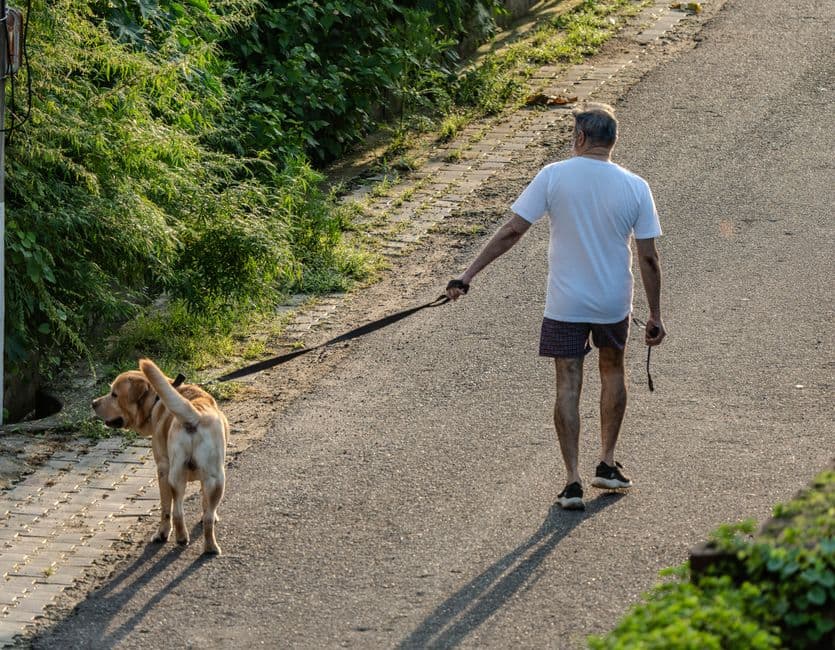
Passeios tranquilos na guia em terreno nivelado costumam ser mais fáceis de tolerar do que corridas repetidas, curvas bruscas ou superfícies escorregadias. Passeios leves para farejar, brincadeiras controladas de buscar com menos saltos altos e pequenas voltas no quintal também contam como movimento significativo.
4. Use hábitos de aquecimento e desaceleração
Dê ao seu cão alguns minutos leves no início e no fim da atividade, em vez de ir do sofá para a velocidade. Para cães mais velhos, um esforço repentino depois de muito descanso pode ser mais difícil do que o exercício em si.
5. Observe o dia seguinte, não só o momento
Um cão pode parecer animado durante o passeio e ficar mais rígido à noite ou na manhã seguinte. Se você notar que ele fica para trás, ofega demais, reluta em se levantar, manca ou demonstra menos interesse no próximo passeio, reduza o ritmo e fale com o veterinário.
- Sinais bons: ritmo constante, recuperação normal, interesse no próximo passeio, movimento relaxado mais tarde no dia
- Sinais de atenção: mancar, diminuir muito o ritmo, precisar parar com frequência, dificuldade para se levantar após o exercício, dor ou irritação incomum
- É preciso falar com o veterinário: queda súbita na atividade, colapso, claudicação persistente, sinais de dor ou mudanças importantes em escadas, saltos ou postura para fazer as necessidades
Movimento diário é mais do que exercício formal
Os estudos de longevidade canina estão cada vez mais tratando rotina e ambiente como parte do envelhecimento saudável. Isso significa que o quadro de atividade do seu cão inclui mais do que passeios: também inclui com que frequência ele se levanta, explora, fareja, brinca e se movimenta pela casa.
A forma de coleta de dados do Dog Aging Project reflete essa visão mais ampla, acompanhando estilo de vida, ambiente, comportamento e saúde em conjunto. Para os tutores, isso é um lembrete útil de que “manter cães sêniores ativos” pode significar apoiar muitos tipos de movimento ao longo do dia.
A AAHA também orienta os tutores a informar o veterinário sobre mudanças na mobilidade e na atividade em casa e a discutir exercício mental e físico diário adaptado à condição do cão. As observações em casa são valiosas porque muitas mudanças aparecem ali primeiro.
Formas simples de aumentar o movimento total diário sem sobrecarregar seu cão incluem:
- Fazer um passeio extra curto para farejar, em vez de alongar todos os passeios.
- Espalhar parte da refeição para uma busca leve de faro, se o veterinário disser que isso é apropriado.
- Posicionar água, caminhas e tapetes antiderrapantes para que seu cão se mova com segurança pela casa.
- Usar sessões curtas de treinamento com comandos fáceis para acrescentar engajamento mental entre os passeios.
- Estimular saídas regulares e calmas, em vez de longos períodos de inatividade seguidos de uma grande saída.
Essa também é a razão pela qual contadores genéricos de passos podem ser enganosos. Dois cães podem registrar totais parecidos enquanto fazem tipos de movimento muito diferentes, e o melhor dia de um cão mais velho pode não se parecer em nada com o melhor dia de uma raça jovem de trabalho. Uma meta baseada em ciência e ajustada à raça, que considere idade, peso e saúde, costuma ser mais útil do que buscar um número universal.
O que levar para o veterinário
Se você quer um plano melhor para o movimento e o envelhecimento saudável em cães, suas observações são uma das ferramentas mais úteis que você tem. Os veterinários conseguem orientar melhor quando sabem não apenas que seu cão está “diminuindo o ritmo”, mas como isso se manifesta na vida real.
Antes da consulta, mantenha um registro simples de uma a duas semanas com:
- Quanto tempo seu cão caminha confortavelmente
- Se ele diminui o ritmo perto do final ou em subidas
- Qualquer mudança em escadas, pulos, entrada no carro ou levantar da cama
- Como ele fica mais tarde naquele dia e na manhã seguinte
- Mudanças no apetite, peso, sono ou vontade de brincar
Depois, faça perguntas práticas:
- Que tipo de exercício é melhor para meu cão agora?
- Com que frequência devemos passear e por quanto tempo, aproximadamente?
- Há superfícies ou atividades que devemos evitar?
- Dor, peso ou perda de massa muscular podem estar afetando a mobilidade?
- Que mudanças devem me fazer ligar antes?
Essa conversa se alinha de perto à recomendação da AAHA de discutir mudanças de mobilidade em casa e adaptar o exercício mental e físico diário à condição do seu cão. O plano certo raramente é “parar a atividade”; normalmente é “fazer a quantidade certa, da maneira certa, e reavaliar conforme seu cão muda”.
Fontes
- AAHA: Diretrizes de Cuidados para Sêniores de 2023
- AAHA: Orientação sobre a fase de vida do cão sênior
- AAHA: Envelhecendo com elegância — como apoiar seu pet sênior
- AVMA: Folheto para tutores de pets sêniores
- AKC: Como oferecer exercício adequado a cães sêniores
- Visão geral do Dog Aging Project na Nature Aging
- Recursos de dados do Dog Aging Project
- Estudo de coorte do Dog Aging Project sobre determinantes sociais e desfechos de saúde