How Often to Walk a Dog: Daily Walks by Breed

Most dogs should not be put on a fixed “everyone gets the same number of walks” schedule. The right number of walks per day depends on your dog’s breed and energy level, age, fitness, health, and personality, with many healthy adult dogs doing well on two walks a day and puppies or seniors often benefiting from shorter, more frequent outings.
There isn’t one perfect number of walks per day
The short answer is that dog walking frequency should be individualized. The American Kennel Club says a dog’s walking needs vary by age, breed, health status, and personality, and the AAHA Canine Life Stage Guidelines recommend discussing daily exercise needs appropriate to the dog’s life stage.
That means “how often to walk a dog” is really a matching problem. A young Labrador Retriever, an older Shih Tzu, and a Bulldog in warm weather should not all get the same plan, even if they live in the same home.
As a practical starting point, many healthy adult dogs can handle two walks a day. The AKC notes that if your adult dog is healthy, you can gradually increase walk length or take them out twice daily, while less-active or out-of-shape adults may need to begin with shorter 10 to 15 minute walks.
| Dog type | Good starting frequency | What to watch for |
|---|---|---|
| Puppy | 2 to 3 short walks daily | Fatigue, overstimulation, reluctance to continue |
| Healthy adult | Often 2 walks daily | Energy after walks, recovery, behavior at home |
| Less-fit adult | Shorter walks, then build up | Heavy panting, soreness, slowing down early |
| Senior dog | Shorter, more frequent walks | Stiffness, slipping, hesitation on stairs or curbs |
| Dog with health concerns | Vet-guided plan | Any breathing trouble, pain, collapse, or intolerance |
Breed matters because dogs were built for different jobs
If you want a useful answer, start with breed purpose and body type. AKC notes that some lower-exercise-requirement breeds may be fine with a walk around the block, while high-energy dogs often need more total activity across the day.
This is why breed-tuned goals are more helpful than generic step counts. A Border Collie, Basset Hound, Greyhound, and Pug may all enjoy walks, but they differ in stamina, stride, speed, heat tolerance, and how much structured activity they can comfortably handle.
High-energy and working breeds
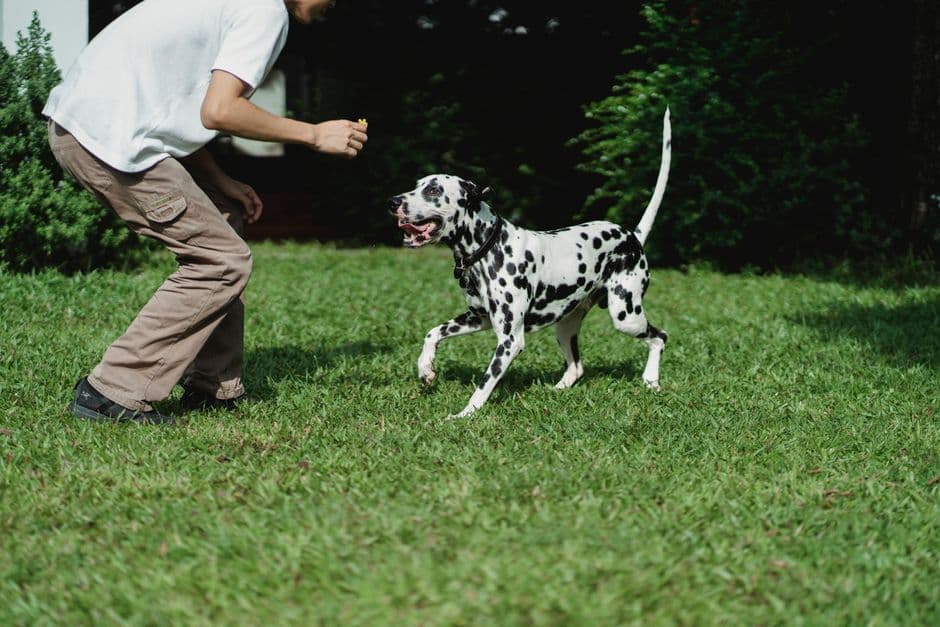
Breeds such as Border Collies, Australian Shepherds, Labrador Retrievers, German Shorthaired Pointers, and many mixes with working or sporting backgrounds often need more total daily activity. For these dogs, two walks may be the minimum framework, with one or both outings needing enough time and purpose to feel satisfying rather than just a quick potty loop.
These breeds were developed for herding, retrieving, tracking, or sustained work beside people. That background often shows up as higher endurance and a stronger need for movement, sniffing, training, and problem-solving during walks.
Lower-energy, small, or companion breeds
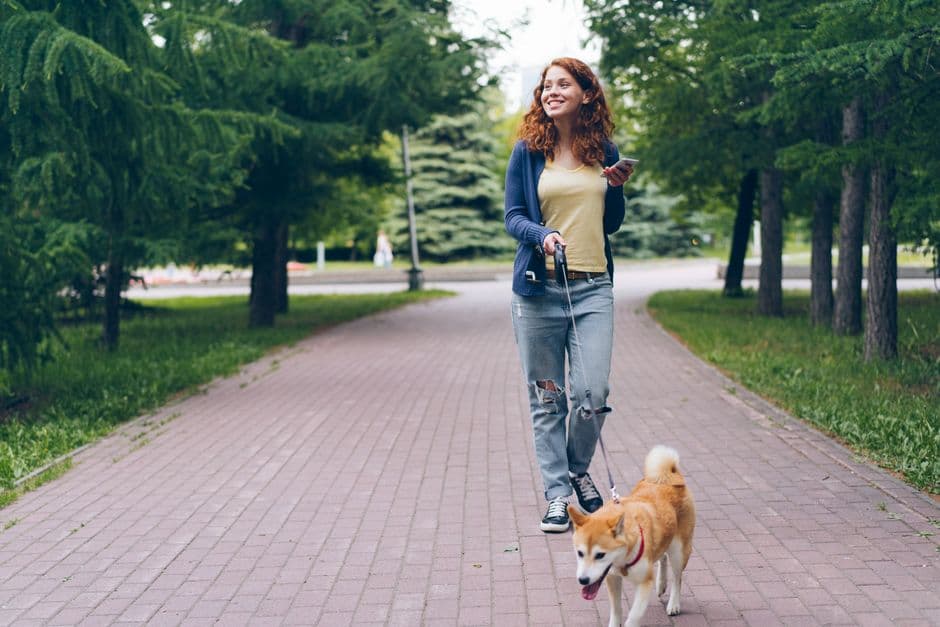
Dogs such as Shih Tzus, Maltese, Cavalier King Charles Spaniels, and some toy-breed mixes often need less total walking volume. AKC specifically notes that for some lower-exercise-requirement breeds, a walk around the block may be enough, especially when combined with indoor play and normal daily movement.
That does not mean these dogs should be skipped entirely. It means their walks per day may stay shorter, slower, and more focused on routine, sniffing, and comfort than mileage.
Flat-faced and heat-sensitive breeds
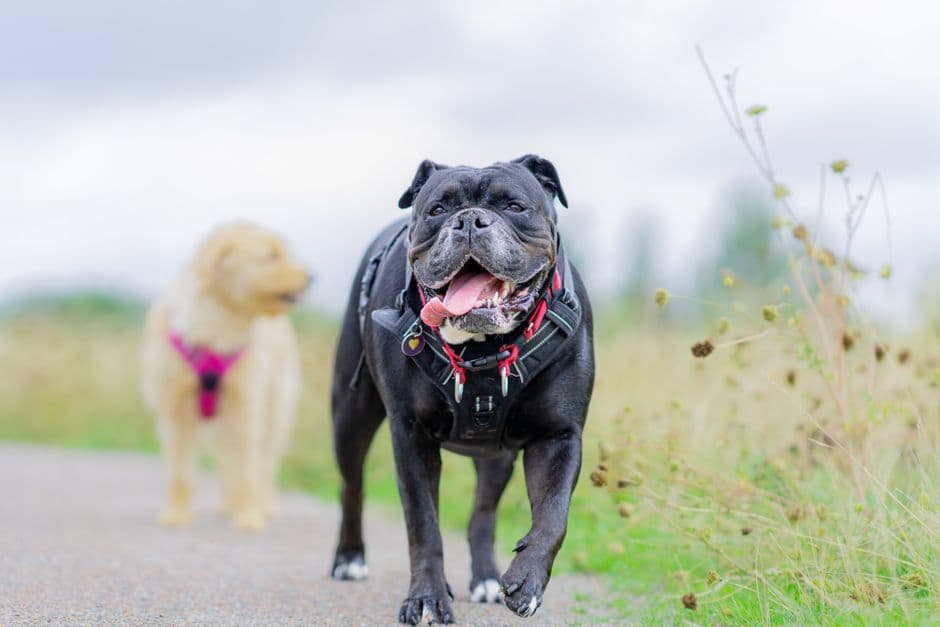
Bulldogs, Pugs, Boston Terriers, and other brachycephalic breeds may need extra caution because breathing and heat regulation can be harder for them. AKC advises adjusting exercise plans with a veterinarian for dogs with respiratory issues, and that same caution makes sense for dogs that struggle in warm or humid conditions.
For these dogs, dog walking frequency may be split into shorter outings, especially during cooler hours. Talk to your veterinarian if your dog pants heavily, slows suddenly, or seems to recover poorly.
Long-backed, giant, or heavy-built breeds
Dachshunds, Basset Hounds, Great Danes, Saint Bernards, and other dogs with structural considerations may do better with steady, moderate walks than repeated high-impact bursts. Their ideal schedule is often less about chasing distance and more about keeping activity regular and manageable.
This is one reason Pawmi focuses on total daily activity shaped by breed, age, weight, and health. The best routine is the one your dog can do comfortably and consistently.
Age changes how often to walk a dog
Life stage is one of the clearest ways to set walks per day. Puppies usually need short and frequent outings, healthy adults can often handle longer walks, and seniors may do best with slower, more frequent sessions.
The AKC’s guidance is especially practical here, because it gives concrete examples without pretending every dog is the same.
Puppies: short and frequent
In the first few months, walks should be short and frequent. AKC gives the example that a 10-week-old puppy might go on a 10-minute walk two or three times a day.
That approach fits how puppies grow and learn. They tire faster, have shorter attention spans, and often need repeated chances to practice leash skills, confidence, and bathroom routines without being pushed too far.
- Young puppies: aim for brief, calm outings rather than one long walk.
- Use walks for exposure, leash practice, and sniffing, not speed.
- Stop before your puppy gets exhausted, overstimulated, or reluctant.
Adult dogs: often two walks a day
For healthy adults, two walks per day is a sensible starting point. AKC says you can gradually increase walk length or take a healthy adult dog out twice a day, while less-active or out-of-shape adults may start with 10 to 15 minutes.
If your adult dog still seems restless after two walks, the answer may be more total activity, more enrichment during the walk, or both. If your dog struggles with even short outings, scale back and consult your vet.
Senior dogs: slower and more frequent
Older dogs often do better with several easier outings than one demanding one. AKC advises slower, more frequent walks for senior dogs and dogs with arthritis or mobility issues, noting that short walks can help avoid joint stiffness and inflammation.
Keep the route predictable, allow more sniffing time, and watch how your dog feels later in the day. If your dog appears sore, stiff, or unusually tired afterward, talk to your veterinarian about adjusting the plan.
Use fitness and health to fine-tune dog walking frequency
Your dog’s current condition matters as much as breed and age. A fit adult mixed-breed dog may comfortably take two substantial walks a day, while a dog carrying extra weight or dealing with joint, heart, or breathing limitations may need a gentler build-up.
AKC advises that dogs with hip, heart, or respiratory issues should have exercise plans adjusted with a veterinarian. That is especially important if you are changing frequency, adding hills, or walking in difficult weather.
If your dog is out of shape
Start smaller than you think you need. For less-active or out-of-shape adults, AKC says a 10 to 15 minute walk is a good starting point, which may be more useful than forcing one long outing that leaves your dog struggling.
You can then build gradually by adding time, adding a second walk, or making one daily route slightly longer. Steady progress is usually easier on the dog than dramatic changes.
If your dog is overweight
The AAHA Weight Management Guidelines provide a clear, evidence-based example: for an obese dog without orthopedic restrictions, one approach is to start with a 5-minute walk three times per day, then gradually increase until reaching 30 to 45 minutes of walking per day.
This is a useful reminder that more frequent short walks can be better than one long session. If your dog is overweight, consult your vet before increasing exercise, especially if there is any history of lameness, breathing trouble, or heat intolerance.
Signs your current schedule may need adjustment
- Your dog is bouncing off the walls after every walk and still seems underworked.
- Your dog drags behind, sits down, or resists going out.
- You notice heavy panting, coughing, limping, or slow recovery.
- Your dog seems stiff later, especially after one long outing.
- Weather makes your usual route clearly uncomfortable.
Any of those can mean the frequency, length, pace, or timing should change. Health-related concerns deserve a call to your veterinarian rather than trial and error.
A simple way to build the right walking routine
The best routine is one your dog can do consistently and comfortably. Instead of chasing a fixed number of walks per day, build from a sensible starting point, then adjust based on your dog’s breed tendencies, life stage, and recovery.
That is also why tracking total daily activity can be more helpful than only counting individual walks. Two short strolls and indoor movement may be enough for one dog, while another needs two structured walks plus more active time.
- Pick a starting schedule. Try 2 to 3 short walks for puppies, 2 walks for many healthy adults, or shorter and more frequent walks for seniors.
- Match it to breed type. Sporting, herding, and working breeds often need more total activity than companion or lower-energy breeds.
- Adjust for fitness. If your dog is deconditioned, begin with 10 to 15 minutes, or even shorter sessions if your veterinarian recommends it.
- Watch recovery. Your dog should settle normally afterward, not appear wiped out or sore for the rest of the day.
- Change one thing at a time. Add a few minutes, a second outing, or more sniff-and-train time before making big jumps.
- Use weather and health as guardrails. Shorter walks in heat, slower walks for seniors, and vet guidance for dogs with medical issues are all smart adjustments.
If you want a practical benchmark, start with what AKC describes: short, frequent walks for puppies; often two daily walks for healthy adults; and slower, more frequent walks for senior dogs. Then tailor from there.
Sources
American Kennel Club: How Often Should You Walk Your Dog?
American Kennel Club: How Much Exercise Does a Dog Need Every Day?