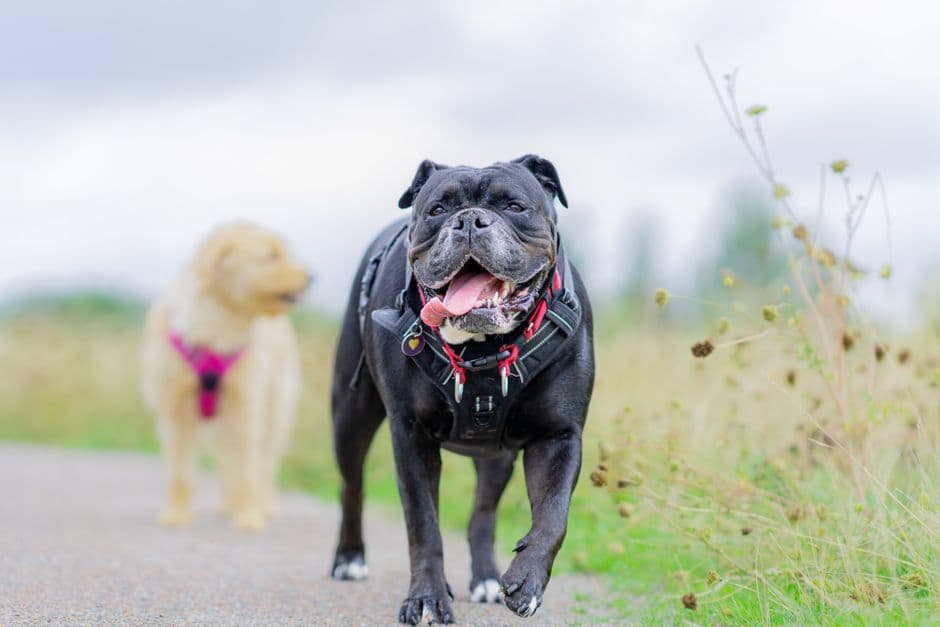
Senior Dog Feeding Guide: When to Adjust Meals

Most dogs do not need a new food the moment they turn 7. A better senior dog feeding guide is to watch your dog’s body condition, muscle, appetite, activity, and health, then adjust meal size, calorie density, and sometimes protein or fiber with your veterinarian’s help.
When is a dog a senior?
There is no single birthday that makes every dog a senior. Size and breed matter, which is why feeding older dogs should start with your individual dog rather than a number on the calendar.
The American Kennel Club notes that many veterinarians begin senior screening around age 7, but large and giant breeds often enter their senior years earlier. Some clinicians use the last quarter of a dog’s expected lifespan as a practical way to think about “senior” status.
That means a Great Dane and a Toy Poodle may need feeding reviews at very different ages. If your dog is slowing down, gaining weight on the same amount of food, or losing muscle even while eating normally, it is a good time to review the diet with your vet whether or not your dog has hit a textbook senior age.
A simple way to think about it
- Small breeds: often stay “adult” longer before senior changes become obvious.
- Large and giant breeds: often show senior needs earlier.
- All dogs: benefit from a nutrition check when body shape, energy, appetite, or health changes.
Do older dogs need senior food?
No, not automatically. Age alone is not a reason to switch foods if your dog is doing well on a complete and balanced adult maintenance diet.
AAHA states that if an older dog is thriving on a complete and balanced adult maintenance food, it is appropriate to continue that diet until a medical condition or a change in body condition suggests otherwise. AAHA also points out that there are no AAFCO nutrient profiles specifically for senior dogs, so “senior” on the label is not a standardized nutritional guarantee. See AAHA’s guidance on age-specific and breed-specific diets and its senior nutrition recommendations.
What matters more than the word “senior” is whether the food fits your dog now. For one older dog, the right move may be a lower-calorie formula. For another, it may be the same adult food in a smaller portion. For a dog losing muscle, your veterinarian may suggest a diet with adequate or mildly increased high-quality protein.
| Question | Better guide than age label alone |
|---|---|
| Should I switch to senior food? | Check body condition, muscle condition, appetite, activity, and health status first. |
| Is a “senior” label enough? | No. Senior labels are not standardized by a specific AAFCO senior nutrient profile. |
| Can my dog stay on adult food? | Yes, if it is complete and balanced and your dog is maintaining a healthy body condition and doing well. |
How senior dog portion size usually changes
Older dogs often need fewer calories, but not always less nutrition. The key shift is usually in energy intake, not a blanket reduction in everything.
AAHA’s senior-care guidance says a dog’s maintenance energy requirements generally decrease over its lifetime. As dogs age, they often become less active, and many healthy seniors do best with lower caloric density and sometimes more fiber to help maintain an ideal body condition score. You can review that in AAHA’s senior-care nutrition section.
That is why senior dog portion size should not be based on cup amounts alone. The food label is only a starting point. AAHA advises adjusting from there, because older dogs with lower activity often need fewer calories than the bag suggests. Their practical feeding guide also recommends changing foods gradually over about a week by mixing the old and new food. See AAHA’s feeding advice.
What to track instead of cups alone
WSAVA and AAHA both emphasize routine nutritional assessment. That means watching:
- Body weight: weigh your dog regularly.
- Body condition score (BCS): are the ribs easy to feel, with a visible waist?
- Muscle condition score (MCS): is your dog losing muscle over the spine, hips, or head?
- Daily activity: lower activity often means lower calorie needs.
- Appetite and stool quality: changes can signal that meals need review.
For a practical framework, use the WSAVA Global Nutrition Guidelines alongside your veterinary visits. A phone-first tracker such as Pawmi can also help you look at total daily activity over time, which gives useful context when you and your vet are deciding whether a portion is still appropriate.
A practical adjustment method
- Start with the feeding label for your dog’s current weight.
- Compare that amount with your dog’s recent activity and body condition.
- If your dog is gaining fat, reduce calories modestly rather than making a dramatic cut.
- If your dog is losing muscle or weight, consult your veterinarian before increasing food or changing formulas.
- Recheck weight, BCS, and MCS after a couple of weeks and adjust again if needed.
What nutrients matter most in feeding older dogs
For many seniors, the goal is to preserve lean mass while avoiding excess calories. That often means paying close attention to protein quality, calorie density, and fiber instead of chasing a “senior” label.
AAHA notes that mild increases in protein content or quality may be appropriate for healthy aging dogs to help support lean body mass. A recent peer-reviewed review on nutrition in older dogs also emphasizes preserving muscle while avoiding overfeeding calories. See AAHA’s guidance and the review article in Nutrients.
This does not mean every older dog should get a high-protein diet without review. If your dog has kidney concerns, dental disease, appetite changes, or other health issues, talk to your veterinarian before making changes.
Common nutrition priorities for seniors
- Appropriate calories: often lower than in younger adulthood.
- High-quality protein: may help support muscle in healthy aging dogs.
- Fiber: sometimes helpful when a dog needs a less calorie-dense diet.
- Palatability and texture: useful if chewing becomes harder or appetite changes.
- Consistency: sudden switches can upset digestion, so transition gradually.
If you feed treats, include them in the day’s total calories. Many portion problems come from keeping meals the same while treats, table scraps, or low-activity days quietly add up.
Signs it is time to adjust meals or schedule a diet review
The best time to change an older dog’s meals is when your dog’s body or routine changes, not just when a birthday passes. Small shifts in shape, stamina, or eating habits often matter more than age alone.
AAHA recommends veterinary exams for senior dogs every six months, and those visits should include a diet review. This is especially important if age-related problems such as arthritis, kidney disease, obesity, dental disease, or appetite changes develop. Read AAHA’s senior care recommendations here.
Call your vet for a feeding review if your dog:
- Gains weight on the same food and routine
- Loses weight without a planned change
- Seems hungrier or less interested in food
- Shows muscle loss over the back end or head
- Has trouble chewing or dropping food
- Becomes less active, such as after mobility changes
- Develops a new health condition or starts medication
These are not reasons to guess. They are reasons to consult your vet and review food type, senior dog portion size, meal frequency, and treat habits.
How to change your senior dog’s meals safely
Most successful feeding changes are gradual and measured. Start small, track the response, and give each adjustment enough time to show whether it helps your dog maintain a healthy body shape and energy level.
A simple step-by-step plan
- Take a baseline. Record your dog’s weight, photos from above and the side, activity level, and current daily food amount.
- Use the label as a starting point only. Then adjust for your dog’s age, size, activity, and body condition.
- Change one thing at a time. Either reduce portion size, change calorie density, or alter meal frequency so you can tell what made the difference.
- Transition new foods over about a week. Mix increasing amounts of the new food with the old food, as AAHA recommends.
- Recheck every couple of weeks. Look at weight, BCS, stool quality, appetite, and muscle.
- Review at each senior exam. A twice-yearly vet check is the right time to fine-tune meals again.
If your dog’s daily movement has dropped, reducing calories may make sense even if you keep the same food. That is one reason breed-tuned activity tracking can be helpful: not every dog should eat or move like a young, high-energy adult, and total daily activity gives useful context for meal planning.
The big picture is simple. Feeding older dogs well means matching food and portion size to the dog in front of you: breed and size, age, body condition, muscle, activity, and any health changes. Talk to your veterinarian, review the diet every six months, and let your dog’s condition guide the bowl more than the marketing on the bag.
Sources
- AAHA: Age-Specific and Breed-Specific Diets
- AKC: Is Your Dog a Senior?
- AAHA Senior Care Guidelines: Nutrition
- WSAVA Global Nutrition Guidelines
- AAHA: 5 Ways to Know How Much to Feed Your Pet
- Peer-reviewed review: Nutritional management and healthy aging in dogs
- AAHA: Supporting Your Senior Pet—Veterinary Care Recommendations